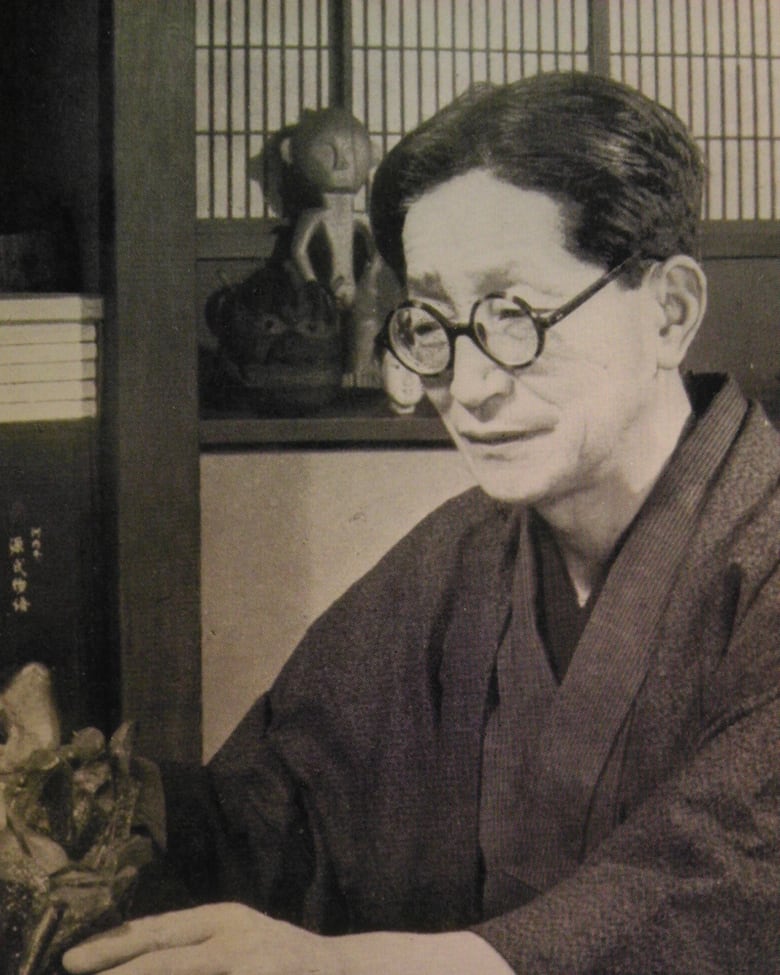
Orikuchi Shinobu
Itoshi was once "unpleasant." Haikara was once an insult. "Kotodama no sakiwau kuni" was not praise of the language. The folklorist Orikuchi Shinobu re-reads Japanese through the life and belief of ancient people. Reading Kokugo to minzokugaku (1937) and Gokon-ron no danpen (1931).
Reading Orikuchi Shinobu — The Man Who Re-Read Words Through Ancient Life and Belief
Itoshi once meant "unpleasant." "Haikara" was once an insult. Orikuchi Shinobu (1887–1953), known as a folklorist and poet, also kept talking about the Japanese language itself from a distinctive angle. Reading the lecture "Kokugo to minzokugaku" (1937) and the paper "Gokon-ron no danpen" (1931).
Itoshi Once Meant "Unpleasant" — How It Turned Into "Itoshii" ("Dear")
"Oitoshii" expresses a feeling of finding someone lovable and precious. Yet the old word it came from, "itoshi," seems to have first meant "unpleasant." Orikuchi Shinobu explains, with this one word, how meaning shifts when a word is pulled along by another.
"Haikara" Was Once an Insult — The Story of "High Collar" and "Ash Husk"
Today "haikara" is praise: stylish, modern. But according to Orikuchi Shinobu's lecture, the word began as an insult that newspapermen coined to mock men back from abroad. Following, through Orikuchi's telling, how it turned into praise.
Was the Order of Ancient Compounds Reversed? — Hashidate, Kataoka, Shitaūzu
In "takai yama" ("high mountain"), the modifier "takai" comes first. But Orikuchi Shinobu argues that ancient Japanese had compounds in which the noun came first and the modifier came after. Following that view together with the story that "hashi" once also meant vertical things.
Close Reading — "Kotodama no Sakiwau Kuni" Wasn't a Phrase Praising the Language
"The land where kotodama flourishes" is often said to praise the beauty of the Japanese language. In his lecture "Kokugo to minzokugaku" (1937), Orikuchi Shinobu says that is a later misreading. It was originally a belief in the spirit that dwells in words. Reading, in the original, how his argument runs.
Close Reading — "Not Mere Sound Change" — Why Sake Becomes "Saka" and Tree Becomes "Ko"
"Sake" becomes "saka" in "sakadaru" (sake barrel). "Ki" becomes "ko" in "kogane" (gold). Orikuchi Shinobu says this is "not mere sound change." Reading the paper "Gokon-ron no danpen" (1931) in the original.
Legacy and Verdict — The Observations Remain; the Conjectures Are Read as Hypotheses
The account of how itoshi changed meaning still holds. The sake → saka phenomenon was later sorted out in other words by later researchers. Conjectures like the ancient word-order theory and the etymology of fuyu (winter), by contrast, can only be read as hypotheses. Grading Orikuchi Shinobu's word stories, separating the firm from the conjectural.