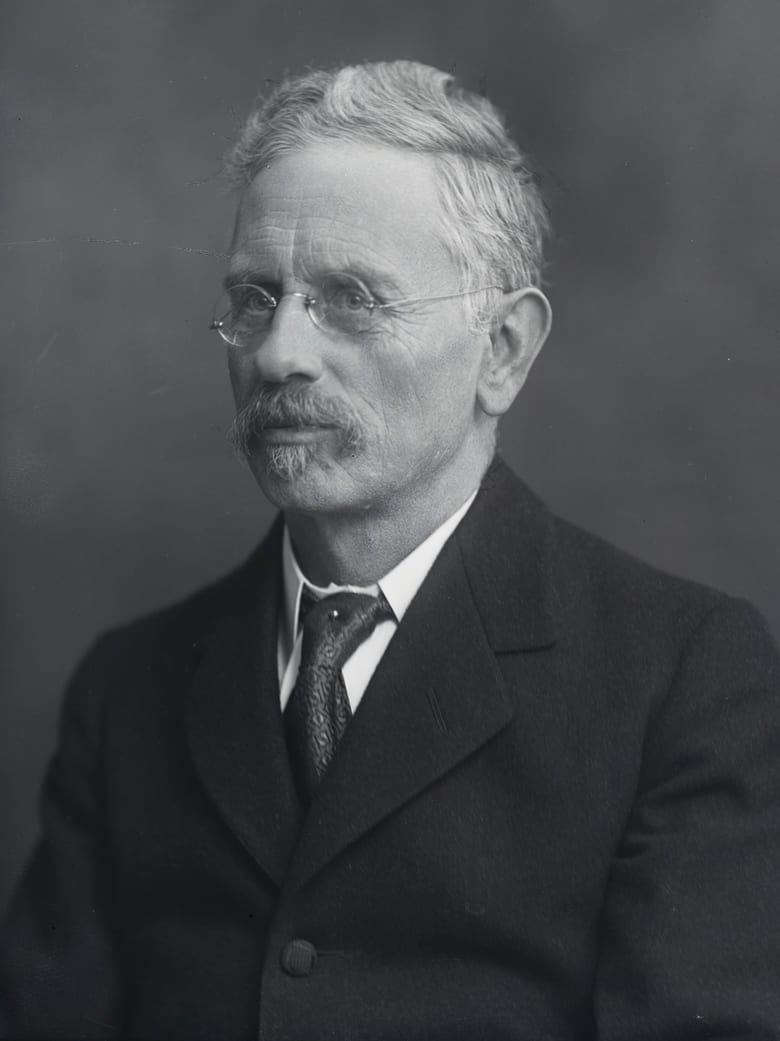
Otto Jespersen
A Danish scholar of English who inherited what Jones, Grimm, and Müller had built and gathered it into one book. Reading Language: Its Nature, Development and Origin (1922) — from the claim that language progresses, through his observations of child language and pidgin languages and his survey of theories of language's origin, to a chapter on "the woman" that wouldn't hold up today.
Reading Otto Jespersen's Language: Its Nature, Development and Origin (1922) — the Man Who Summed Up a Century of Comparative Linguistics
A Danish scholar of English, past sixty, wrote a single sweeping synthesis. The history of linguistics, how children acquire language, pidgin languages, and the origin of speech itself — reading the work that gathered up everything nineteenth-century comparative linguistics had built.
English Hasn't Decayed — It Has Progressed. Jespersen's Provocation, Simply
Old English had case endings and grammatical gender; modern English has lost nearly all of it. Is that decline? Jespersen, reaching for a stone worn smooth in a riverbed, offers exactly the opposite reading.
A Child's "Mistakes" Aren't Mistakes — Jespersen's Observations of Children, Simply
Saying gooses for geese, or using littler to mean "smallest" — a child's grammatical "errors" aren't random at all. Underneath them is a child applying the very same rules adults use, only more faithfully than adults do.
Pidgin Is Not Broken English — Reading Jespersen on Pidgin Languages
The "baby talk" white settlers used toward local people accounts for half the reason Pidgin English looks the way it does — Jespersen was already writing that in 1922. Reading a chapter that deliberately pushed back against a colonial-era assumption.
Bow-Wow, Pooh-Pooh, Ding-Dong — Jespersen Dismantles the Theories of Language Origin
A theory that language began by imitating a dog's bark. A theory that it began in interjections of pain. And — a theory Müller himself proposed, then wisely abandoned. After briskly trying each theory in turn, Jespersen offers his own surprising answer.
Reading the "Woman" Chapter — a Claim Jespersen Made in Earnest That Wouldn't Hold Up Today
"Genius, and linguistic imbecility alike, are very rarely found among women" — in 1922, a professor at the University of Copenhagen wrote this as a scholarly conclusion. Reading the era's pseudo-science of "greater male variability" behind it, and how long sociolinguistics took to leave it behind.
Verdict — How Jespersen's Language Looks a Century Later
His pioneering observations of child language acquisition haven't aged a day. But the chapter on "the woman" was decisively corrected. Grading the foresight and the prejudice that lived side by side in one book, from a century's distance.