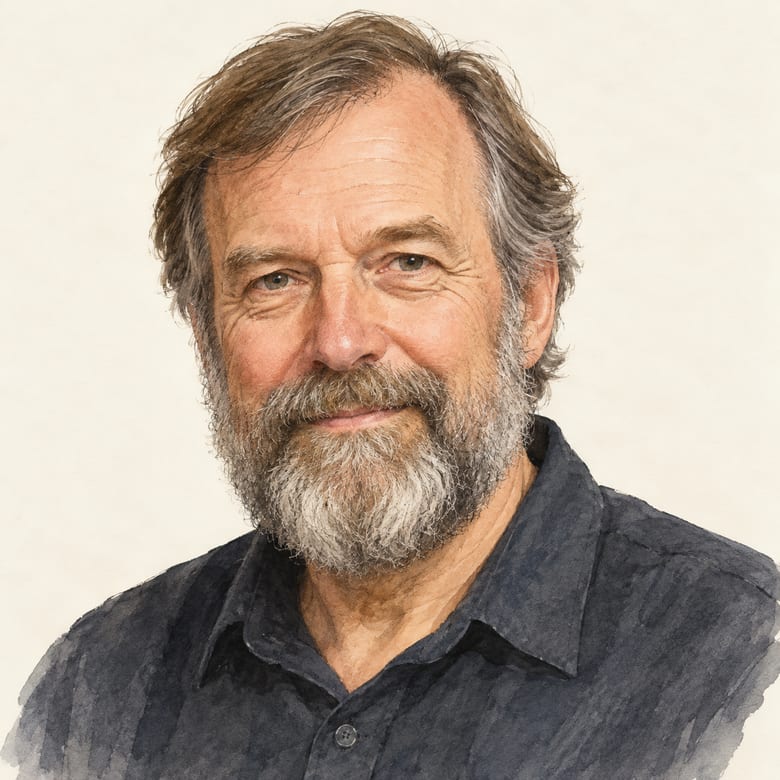
David W. Anthony
In 1786, Jones opened a question: where was the mother tongue spoken? Two hundred twenty-one years later, the archaeologist David Anthony pins down an answer, using wear marks on horse teeth and the word for a wagon. Reading The Horse, the Wheel, and Language (2007), the final feature in the history series.
Reading David W. Anthony's The Horse, the Wheel, and Language (2007) — Archaeology Answers a 200-Year-Old Question
In 1786, Jones showed a single paragraph's worth of evidence that a "mother tongue" must have existed. Two hundred twenty-one years later, an archaeologist pins down where and when that mother tongue was actually spoken — using horse teeth and the word for a wagon. The final feature in the history series.
What a Horse's Teeth Can Tell You — Tracing the Origins of Riding Through Bit Wear
When and where did people first ride a horse, five thousand years ago? There's no written record. The bones themselves give only ambiguous clues. The answer turned up in an unexpected place — the horse's own teeth.
How the Word "Wheel" Tells You the Age of a Dead Language
Proto-Indo-European had words for "wheel" and "axle." And archaeology knows, with surprising precision, when the wheel itself was invented. A single word turns into an unexpected dating tool.
Close Reading — "Pegged to Facts": Anthony's Methodological Self-Discipline
Telling a story about what the speakers of Proto-Indo-European were like takes nothing but imagination — which is exactly what made it dangerous. Reading, in the original English, Anthony's own warning against that danger, from his closing chapter.
Close Reading — "The Yamnaya Horizon Exploded": The Moment the Mother Tongue Began to Branch
Around 3300 BCE, one culture on the steppe suddenly expanded across a vast range. Anthony argues that this very moment is when Proto-Indo-European began splitting into separate branches. Read in the original English.
Legacy and Controversy — Inheriting a Question from Jones, Challenged by Renfrew
Was the homeland of the mother tongue on the steppe, or in Anatolia? The archaeologist Colin Renfrew offered an entirely different answer. The question this feature set has traced from Jones through Brugmann is carried into a live archaeological controversy.
Verdict — How The Horse, the Wheel, and Language Looks After the Ancient-DNA Revolution
In 2007, Anthony built the steppe-origin theory out of archaeological evidence alone. Eight years later, an entirely different science — ancient DNA — confirmed exactly the kind of mass migration he described. The final verdict of the history series, and of this entire history-of-linguistics run.