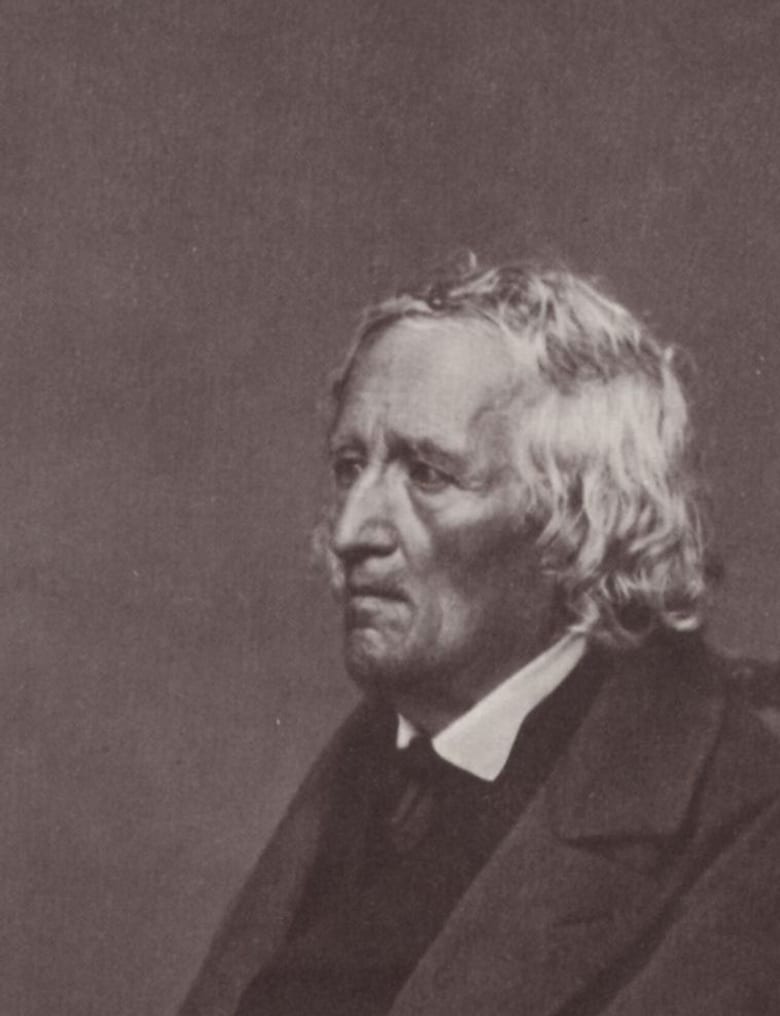
Jacob Grimm
The elder of the brothers famous for collecting fairy tales was also a lawyer turned philologist. One table, on one page of Deutsche Grammatik, Part I, 2nd edition (1822) — reading the discovery that would come to be called "Grimm's Law," from the original German.
Reading Jacob Grimm's Deutsche Grammatik, Part I, 2nd Edition (1822) — How the Man Who Collected Fairy Tales Found a Law in Language
The elder of the brothers best known for collecting fairy tales trained as a lawyer before becoming a philologist. One table, written on one page of a revised edition running past 590 pages, would later be called "Grimm's Law." Reading the 1822 second edition of Deutsche Grammatik, Part I.
Grimm's Law, Simply — Why father and pater Are the "Same Word" Even Though They Don't Sound Alike
English father and Latin pater. They sound nothing alike, yet historical linguistics treats them as the same word, descended along two different paths. No jargon — just familiar words tracing out Grimm's Law.
Why Fairy Tales and Grammar Were the Same Person's Work — the Other Side of the Brothers Grimm
The Brothers Grimm mean Little Red Riding Hood and Snow White. But the same brothers spent a lifetime on one enormous dictionary, and lost their jobs for protesting a king. Fairy tales, grammar, a dictionary, politics — tracing the one thread running under work that looks scattered.
Reading Page 584 — A Close Reading of the 1822 Original
What Grimm called a "twofold sound shift" turns out to mean two separate, successive changes. Reading, line by line, the table that lines up Greek, Gothic, and Old High German — from the original German.
Father and Brother — Why Is Only One of Them "Irregular"? The Exception in Grimm's Law, and the Man Who Solved It
Grimm's Law had a long-known exception. The consonant in father, for some reason, refuses to follow the rule. A decade or so after Grimm's death, a Danish linguist solved that exception — from a place nobody expected.
From a Hunch to a Discipline — What Grimm's Law Left to Linguistics
Grimm's Law did not stay a single table of consonant correspondences. By turning sound change from a matter of impression into a testable regularity, it became the methodological foundation of comparative linguistics — and even set the stage for Saussure to rebuild the field from the ground up.
Verdict — How Grimm's Law Looks Two Centuries Later
"What corresponds to what" is about as settled as anything in linguistics gets. "Why it happened" is, remarkably, still an open argument. Grading the 1822 table from two hundred years' distance.